Philosophy
This page holds the philosophy behind my work as an educator & creative practitioner.
As a society, we are in an interconnected meta-crisis. At its deepest level, I believe it is a crisis of consciousness.
The crisis runs across personal, social and ecological spheres. How can we understand ourselves, experience our interconnectedness with the world, and prepare to act with care, keeping everyone’s wellbeing in mind, so that we live in harmony with existence? What does the educational process look like if our collective purpose is to live together harmoniously?
I believe the core of all this is our changed relationships, our fragmentation. And modern education is one of the biggest influences on all the others.
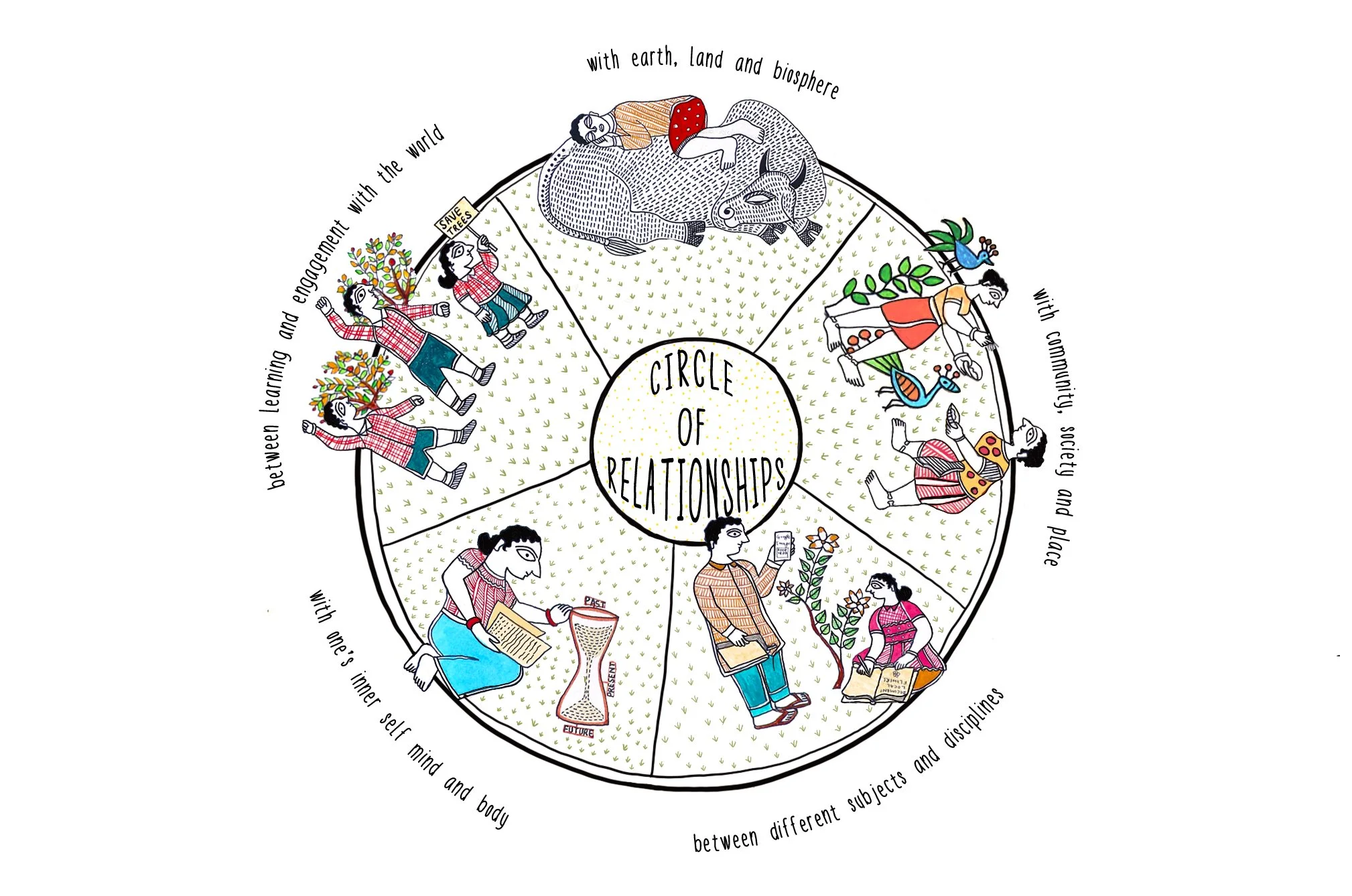
Disconnections caused by modern education
- Disconnection from oneself
- Disconnection from community and society
- Disconnection from Earth, biosphere and land
- Disconnection between subjects and disciplines
- Disconnection between “learning” and real-world engagement
My question
In my daily living I observe, reflect on and question my relationship with family, land, water, career, money, waste, everything. It is a daily quest to be in harmony. The underlying search is how to live with sensitivity and authenticity in this very interconnected world, and how to act and live for the well-being of self, community and environment.
Is there a different way of living, both in personal and in social terms, that is not conflict ridden but essentially peaceful and whole? What role does education and creative practice have in this process?
I am primarily interested in creative practice, but I didn’t find space in the mainstream arts community. Instead, I found my space with children and young adults. I like being with them and exploring different creative processes with them. Slowly, through reading, reflecting and embodied experiences, my philosophy of education emerged, where I try to find pedagogues who explore the aim of education as ‘education for harmony’.
I also write and tell stories, as a creative practice. I create and share stories and narrative as self expression and a way of making meaning. Most of the time my creative practice is intertwined with my educational work.
For me, working in education and on my creative practice is the process of practicing alivelihood ↗.
Where this comes from
My journey as an educator and creative practitioner started as pure exploration and experimentation. Meeting people, working at different places, reading and reflecting helped me develop the philosophy of my current work and of life in general. Someone shared eco-philosophy, someone introduced me to Martin Buber, J Krishnamurti, Gandhi and Waldorf.
Rewilding education
Learning should be dialogic, reciprocal and inquiry based
The teacher is not the sole authority or a transmitter of knowledge. Learning happens when teacher and students go through the process of questioning, sharing, listening and exploring together. Learning does not happen through teaching; it happens through meeting, the meeting of I and Thou (Martin Buber).
Learning should be relational, contextual, interdisciplinary
Learning involves building deeper relationships with oneself, with others and the wider society, with place, and with the more-than-human world.
Learning should be experiential, embodied and action based
Learning should happen with the whole being of a person, engaging head, heart, hand and soul. Experiments, projects, yatras, activities, inquiries, films and music can create opportunities for learning to be contextual, experienced, felt and lived.
Learning outcomes
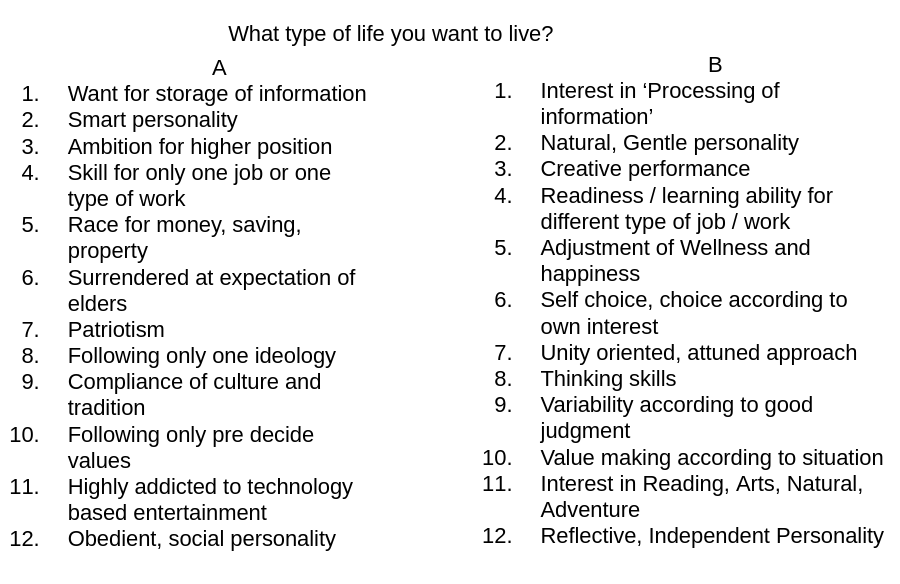
I want to focus on these learning outcomes:
Senses development · Friendship with mind · Good judgment, critical thinking · Essence of community living · Flexibility, freedom, creativity · Entrepreneurship and skills for the future · Learnability, sensitivity, empathy · Expansion of joyfulness
My understanding of education
It comes from a humanist, existential, experiential lineage.
Education is the practice of meeting, relating authentically with ourselves, one another, our places, and the more-than-human world, through looking, listening, questioning, reflecting, and creating together.
Learning with head, heart, hands and soul, we deepen our understanding of ourselves and our interconnections. We cultivate the sensitivity, critical discernment and courage to act freely, responsibly and with care in a shared world.
How to facilitate this education
Do you wish to be a genuine teacher? Here is your responsibility: Enter into the being of the person in your student. Accept him/her unconditionally. Create a space around by enabling him to see and remove the pressure of assumptions and beliefs. Encourage to risk flights in the unknown, seamless life. Reflect together on the learning-unlearning from that flight. Enjoy the friendship.
Mahendra Chotalia
Pedagogies and tools
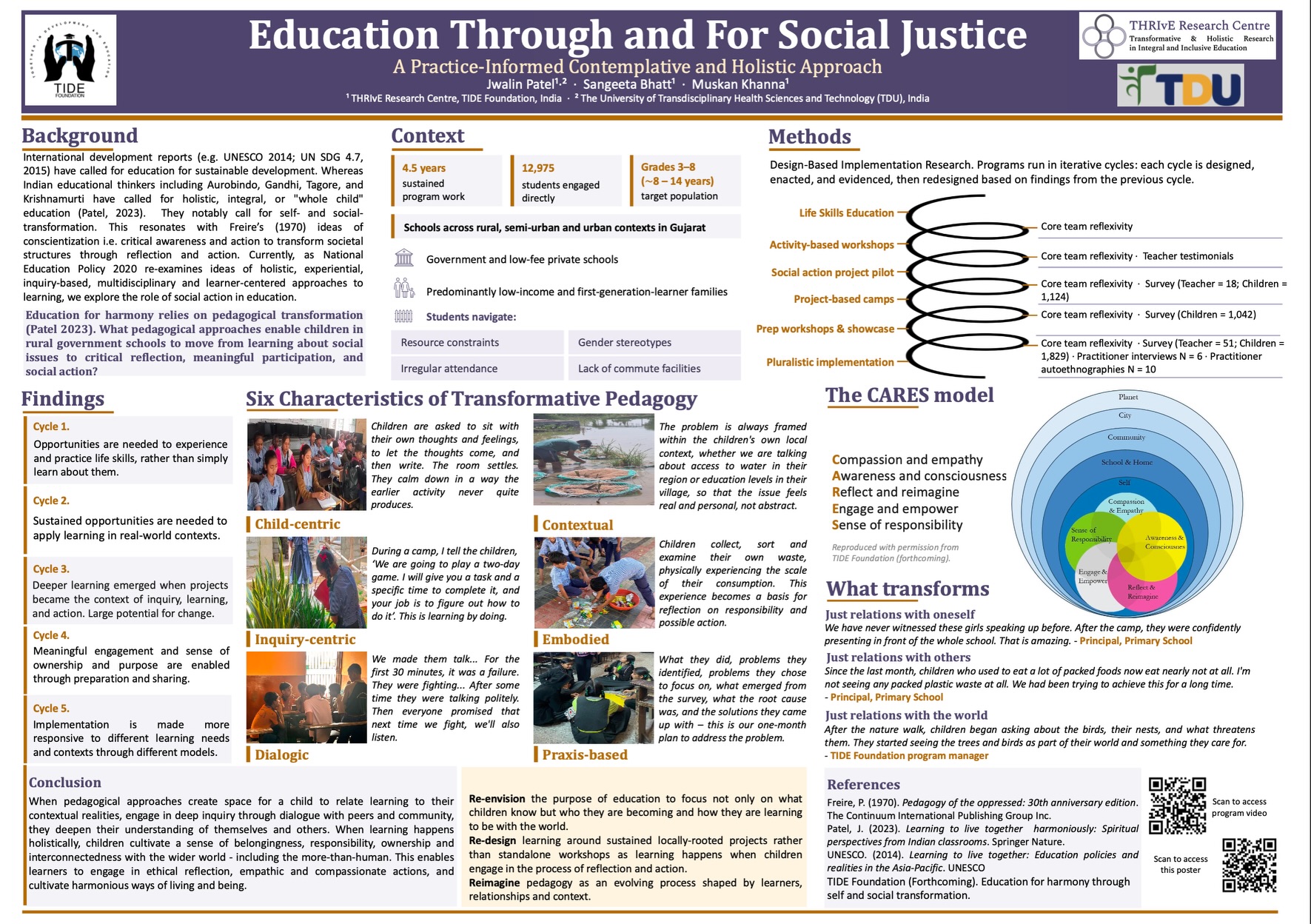
My programs, workshops and interventions are just an anchor. My strong intention is to create a space of dialogue and co-creation. A space which acts as an incubation center for everyone, where we learn, experiment, challenge ourselves, and thereby break barriers and grow in our lives.
For young children (age 3 to 11)
Art, theater, music, movement, nature exploration, inquiry based short projects, children’s literature.
For young adults (age 12 and above)
Interdisciplinary projects (entrepreneurship, inquiry based, civic action projects), nature exploration, theater, third space, yatra and more.
Where I want to focus: guided learning spaces
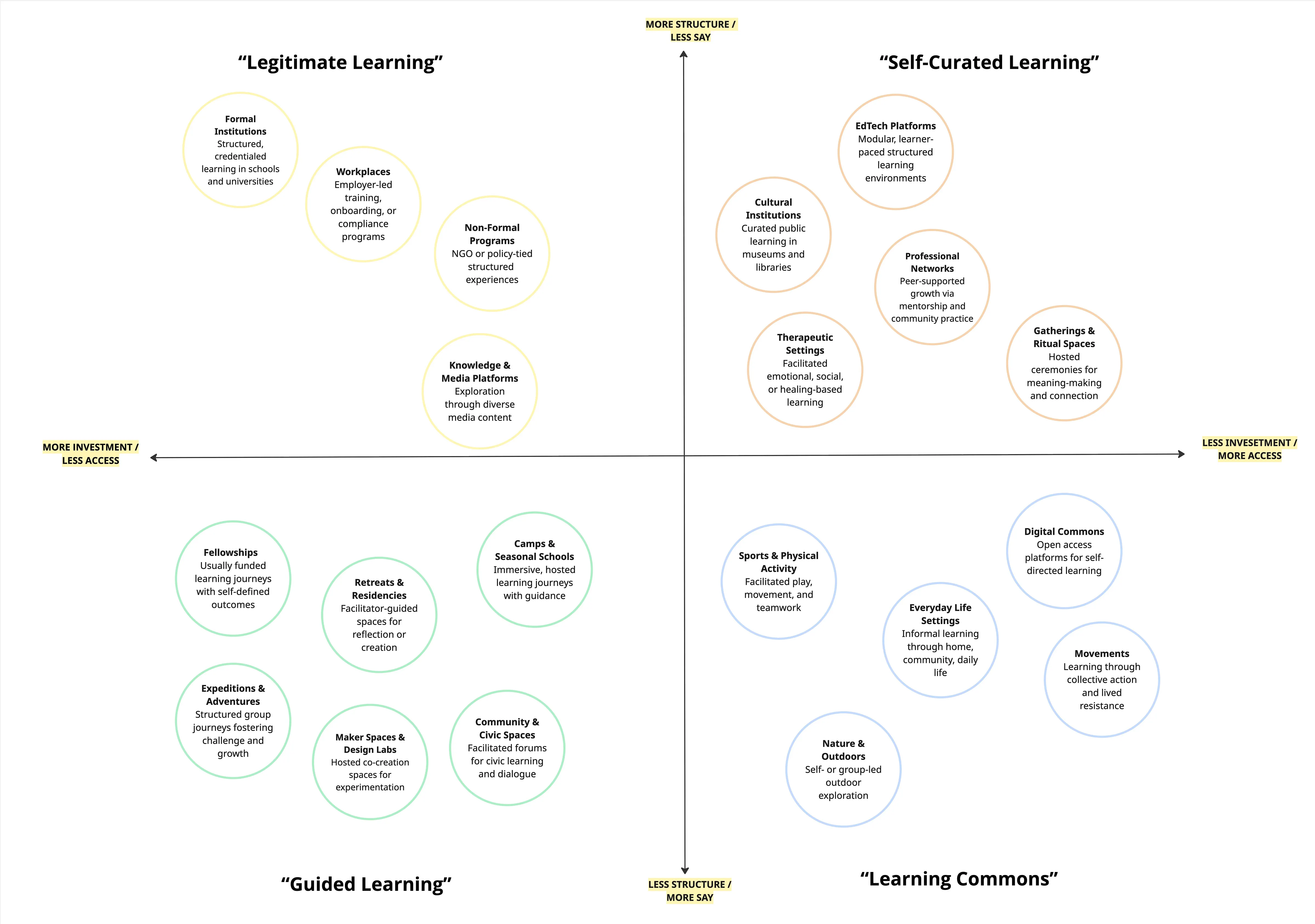
I want to work more in guided learning spaces. Apart from working directly with children, I want to take elective courses at universities, run sessions as part of fellowships, and do long term co-created work with educators and organizations.